

When you decide to speak

My sister Carolyn, arrived unbeknownst to my young parents, hard-of-hearing. It took doctors two and a half years to accurately diagnose her condition because back in those days, that’s how it was. My shaken mother, eight and a half months pregnant with me, insisted on a medical induction to hurry me out, just two weeks after the experts retracted their diagnosis that my sister had ‘minimal brain damage.’ I arrived in a fuzzy haze of strain and relief, relegated mostly to the care of my nanny Violet.
There was no breast milk for me.
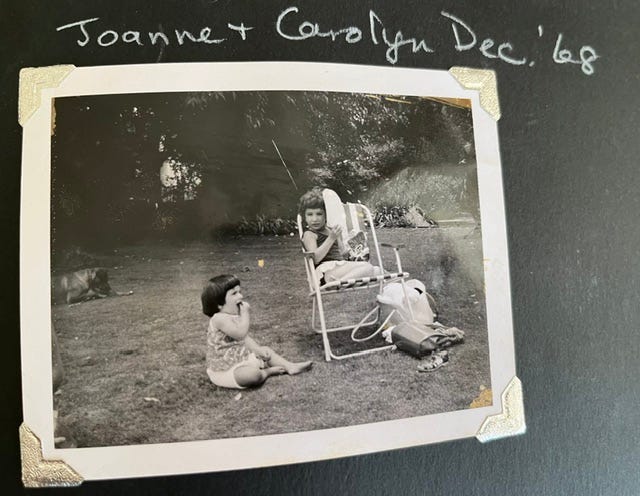
But words came easily. I began to speak when I was nine months old, before I began to walk. In the geometry of our birth order, the role of my sister’s interpreter fell to me as I was, I am told, the only one who could understand her. We shared a private language which I in turn, translated to my parents, until Carolyn could speak on her own.
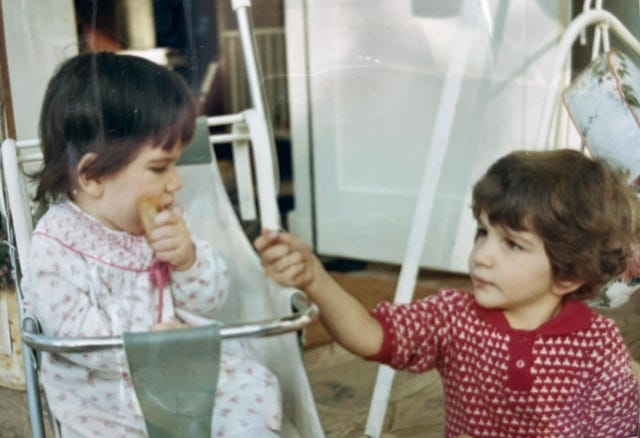
Holding onto my big sister’s hand is where verbal dealings began for me - long before I could read or even think about writing. Until she was fitted with hearing aids and plunged into the sharp rigors of speech and hearing therapy, Carolyn was locked outside of a common language, guttural howls her only form of expression. Slowly, word by painstaking word, her cries of frustration became intelligible communication.
This must be where I first understood – somewhere deep in my cells - that we need words. We rely on them like oxygen, food, and tenderness. We must have language so we can be heard and so we can hear ourselves.
With words, we can say what color we prefer; explain why we’re crying; report what we’ve seen or dreamed or imagined. Words give us relationship, to ourselves, others and the world.
Helen Keller described her epiphanic breakthrough in understanding that words attach to things when her teacher Anne Sullivan held her hand under the water pump and spelled the word ‘water’ out for her. Imagine the moment when her brain grasped it and light fell in dark places, bridges formed over chasms.
In the scissors-paper-rock of life, words beat silence. They are a pre-requisite to what we call equality, the sense that we matter as much as anyone else where Me = You.
Words dispel our invisibility. They are conduits to voice, transforming thirst, hunger, longing, fear, fury into articulable language. They lead us from misunderstanding to understanding and rescue us from catastrophic loneliness. They are passageways, giving us access to each other and a unique admission to a version of ourselves that through the structure, rhythm and cadence of linguistics, becomes storied.
Each of us meets our destiny in our early years. We are planted where we are of service, and I was needed to help someone else speak in a very literal sense. As we grew, and our family crowded around the TV for programmes like Bonanza, Little House on the Prairie and CHIPS, I would watch a bit, then turn to Carolyn to silently mouth an explanation. I learned to summarize and pick out the essentials.
My parents made the tough decision not to send her to a deaf school where she would have learnt sign language. I witnessed Carolyn endure twelve grueling childhood-robbing years of speech and hearing therapy to learn the correct tongue movements and throat vibrations to pronounce her ‘s’s and ‘th’s so she could fit into the hearing world.
When a freedom lands easily like language did for me, we may not see it for what it is – a privilege, a power. Health works that way. Food on the table. When we have never had to fight or reach for something, because it lands in our laps, we may assume it is our birthright, that it is so for everyone.
Because of my sister, I know how precious words are. I have walked beside her struggle to have a voice and it has left me with a commotion of feelings, including guilt, sorrow and some hard to pin.
I have been wired to speak up because not everyone can.
My father once told me he would always back me if I stood up for what I believed in, even if it got me into trouble, at school. With his giant heft as an invisible wind beneath my wings, I was always nominated to ‘ask the teacher for an extension,’ or express the collective complaint of the masses. I got a reputation for having ‘a big mouth,’ and fronted the tiny revolutions in the classroom, withstanding the wrath of teachers.
I have in the past, not been afraid to speak my mind. I have often risked discomfort (my own and others’) if a remark or opinion needs to be challenged. I have on occasion, spoiled dinner party chats and other pleasant events by doing so, much to the strained chagrin of Zed, my husband who is the epitome of repression and tact.
My father was a famous anti-Apartheid cartoonist for a daily newspaper in South Africa over many decades. I grew up to understand that jokes are always political and if someone expects you to laugh at theirs, they are inviting you to share the assumptions on which that humor relies. I will put up with other peoples’ preferences in just about all circumstances, but not their unconscious prejudices – we all have our own blind spots, thank you very much.
It always takes people by surprise whenever we turn out to be humorless about their racism, sexism or personal phobia, especially over canapes. We cannot help coming off as a bit high-and-mighty. To be that earnest is a popularity- (and if the joker is responsible for our paycheck), even career-limiting step. I’m not advocating that we needlessly embarrass people publicly. But staying silent always comes at a cost - we have to live with ourselves and compromised integrity is something of an insomnia-maker.
Some days I am bolder than others. Sometimes I fold into cowardice rather than vexatiousness. It’s the stakes, you see, and how much fight I have in me. At times I just want to pretend I never heard a thing to hurt my heart, and curl up on the daybed with the cat and a book.
To speak up is to front up, a self-fueled conscription of sorts. It is not without its perils. My daughter was once summonsed to record a formal statement at a police station after she confronted a classmate who was bullying her friend. Then there was the time my teenage son took a punch to the neck when he protested a racial slur aimed at African Americans on a basketball court.
We sometimes risk our freedom and lives by speaking the truth. In Charles Dickens’ Oliver Twist, adapted into a 1968 musical drama film, Oliver fronts the terrifying beadle, Mr Bumble, who oversees the orphanage of Mudfog, with ‘Please sir, may I have some more?’ For this sin, he is punished and sold off to anyone who will take him for five pounds. As an archetype, Oliver is the voice of the oppressed and history is filled with such bravery.
Sojourner Truth was a US abolitionist, women’s rights activist and preacher in the 1880’s, famous for her speech at a women’s rights conference where she noticed no-one was addressing the rights of black women. Her words have thundered throughout the annals of time:
‘Dat man ober dar say dat womin needs to be helped over carriages, and lifted ober dicthes and to have the best place everywhere. Nobody eber helps me into carriages, or ober muddpuddles, or bigs me any best place. And Aint I a woman? Look at me Looka at me arm. I have ploughes and planted and gathered into barns, and no mand could head me! And aint I a woman?’
The Turkish poet Nazim Hikmet (1902 – 1963) was incarcerated for his political beliefs and then wrote some of the most beautiful, moving, revolutionary poetry during his years in prison.
Words assign us with responsibility, like guardianship over a precious resource. Sometimes, words are our only freedom, all we have to offer.
The author Toni Morrison once said, ‘The function of freedom, is to free others.’
We are living in a time when speaking the truth has never been more imperilled or more important.
Some nights ago, I got to meet one of the truthtellers of our time, Nova Peris OAM, Indigenous Australian Olympic athlete and former senator who has over the past two and a half years, used her voice to speak up against antisemitism.
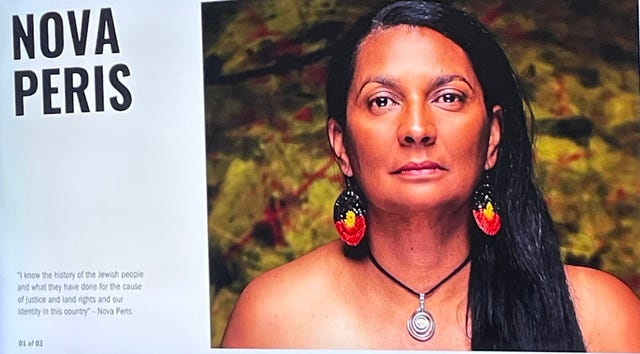
She is the subject of a documentary being made by two Australian women, Unbroken, which confronts the weaponisation of history polarising Australia – from terra nullius to the distortion of Jewish Indigeneity – and challenges what happens when truth is rewritten.
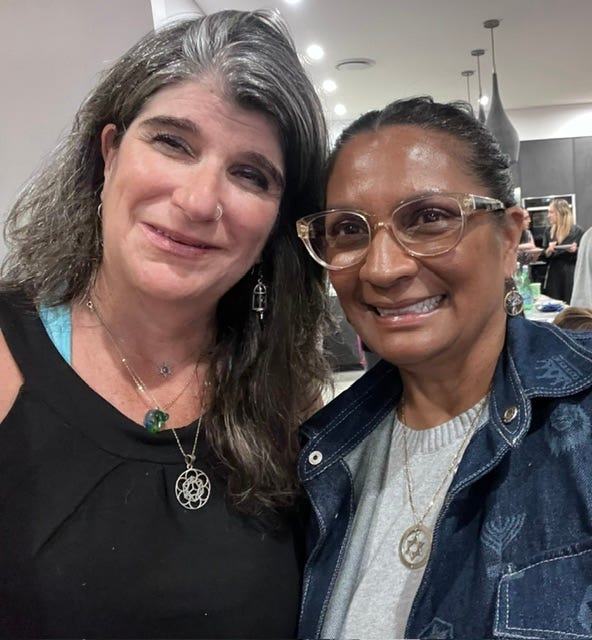
She has been vilified and threatened, as so many who speak up often are. But in her quiet and steady voice, she remains unwavering, unbroken. Meeting her felt like a spiritual chiropractic realignment and reminded me that whenever we speak up to challenge distortions and lies, we reaffirm the miracle of what it means to have a voice.
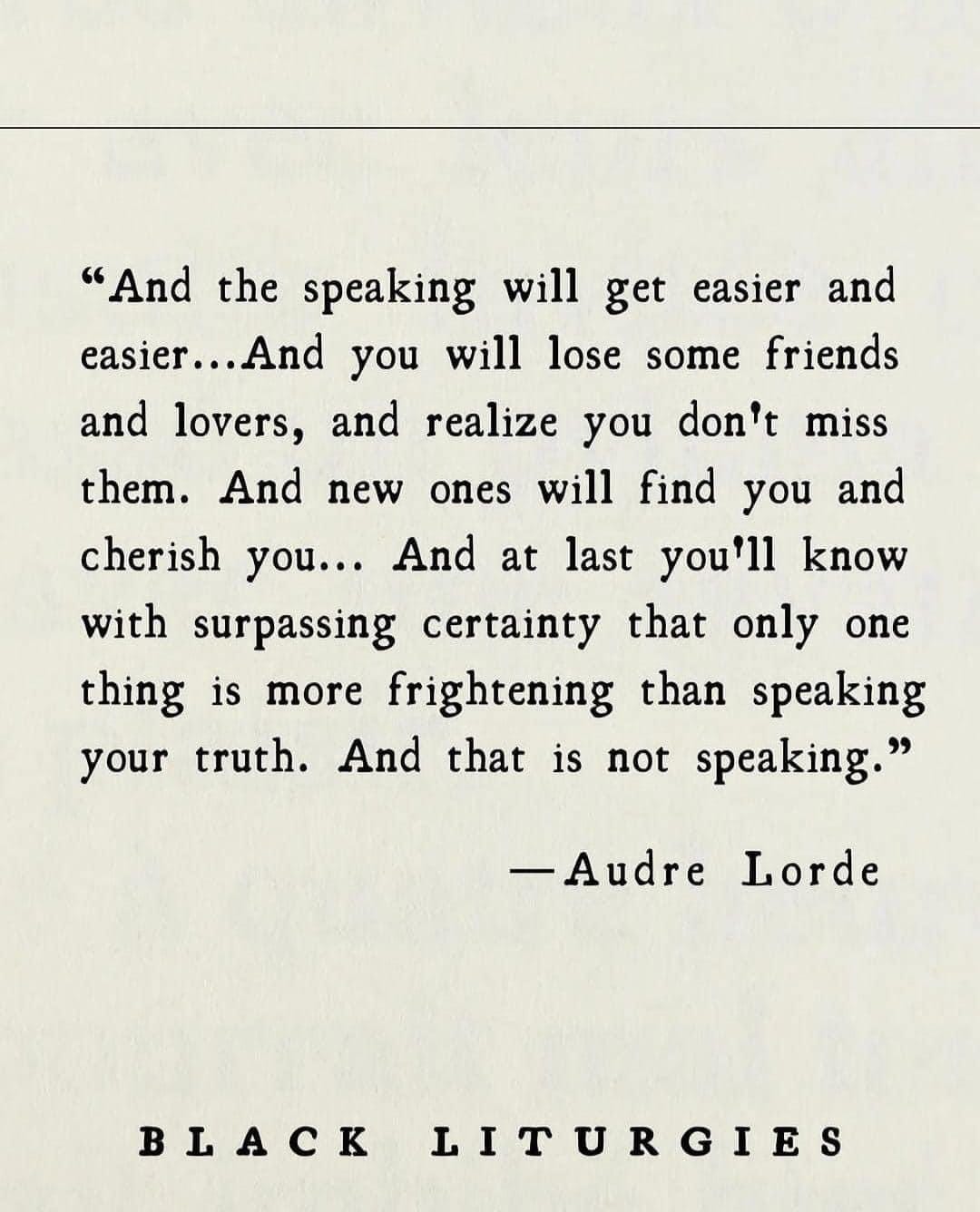
So resonates with me in these times.......have upgraded to paid and look forward to reading more of your wisdom. Thanks Nicole